

Building your own house in Marbella: permits, timescales and taxes
Which permits you need, who signs them, what taxes you pay and in what order. Including the two traps that cost most: the 10% VAT rate and the ten-year structural warranty if you sell early.
Building in Marbella is not harder than buying something finished. It is different: you pay in stages, the timescales are set by a town hall rather than a seller, and there are two or three points where entering badly is not cheap to leave. This is what we explain to anyone who asks us about a plot.
Being the self-builder changes the rules
If you buy a finished house, you buy a product. If you build your own, you are the developer: you commission the project, contract the works, apply for the licence and answer for what goes up. That gives you two things you cannot buy ready-made — a house exactly as you want it, and the margin a developer would have taken — and brings you two others: the risk and the management.
The practical difference shows up early. A developer builds to sell and does the sums on the sale. You build to live, so your decisions do not have to return money to anyone. It is why self-built houses tend to be better resolved inside and worse optimised on cost.
The first thing is not the architect: it is the land
The commonest mistake is falling in love with a plot and asking afterwards what can be built on it. It should be the other way round. Before you sign anything, your architect and your lawyer must tell you, in writing:
- What its buildable area is. How many square metres can be built on that plot, which is almost never what it looks like by eye.
- What setbacks and what height the rules allow in that specific area.
- Whether it is consolidated urban land or whether some urbanisation procedure is still pending, which can add years.
- Whether the services reach the plot boundary or have to be brought there. Taking an electricity connection three hundred metres up a hillside costs real money.
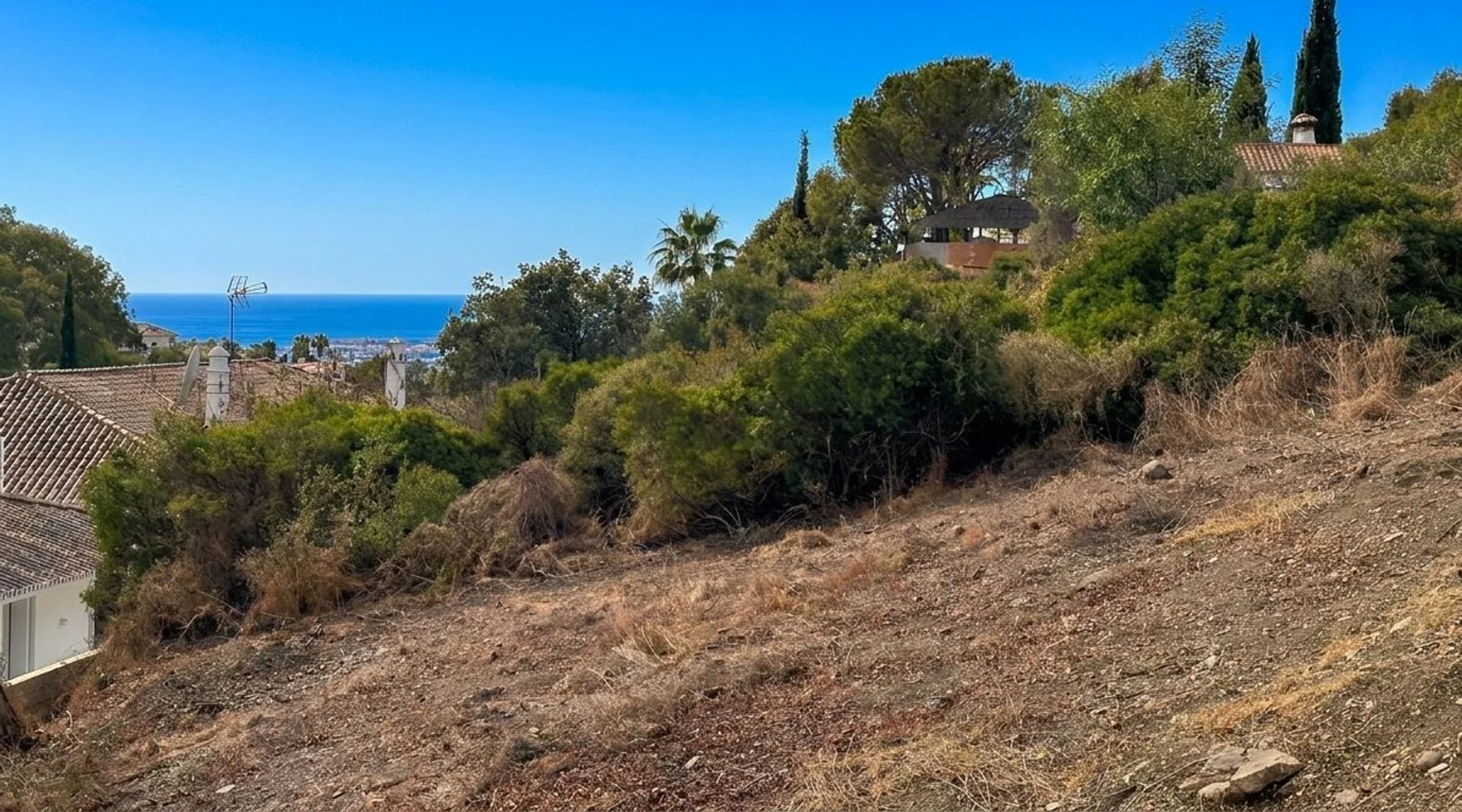
- What slope it has and what ground lies beneath. A hillside plot forces retaining walls and earthworks; sometimes the foundation budget eats whatever you saved on the land.
If you are looking at plots, the ones we have listed are on the custom homes page, and before you visit any of them we tell you what can be built there.
The permits, and who signs what
Building a dwelling is major works, and that means a fixed path:
- Outline project (proyecto básico), drawn up by a registered architect. It is what you submit to apply for the licence.
- Major works licence, granted by the town hall. It is the step that takes longest and the one money cannot accelerate.
- Execution project and site supervision: the architect and the quantity surveyor who sign off and oversee the works. They are not an optional luxury, they are compulsory.
- First occupation licence on completion. Without it there are no utility connections and no proper deed of completed new build.
The major works licence in Marbella is resolved in months, not weeks, and depends on the town hall’s workload and on how clean the project is. A file that has to be queried twice drifts a long way out.
The taxes, one by one
On buying the plot. If you buy from a private individual, transfer tax, which in Andalusia has a general rate of 7%. If a company or a developer sells it to you, it is VAT at 21% — land does not carry the reduced rate — plus stamp duty. That difference is large, and it is worth knowing who you are buying from before doing the sums.
On applying for the licence. The ICIO, the tax on construction, installations and works, calculated on the material execution budget. National law sets 4% as the ceiling, and each town hall sets its own rate by municipal ordinance, plus a processing fee. Confirm the rate in force in the current year’s ordinance: it is not the same in every municipality and it changes.
During the works. VAT at 10% on the construction works, if the contract is directly between you, as an individual, and the builder, and the house is for your own private use. If you are going to let it or use it for an activity, even partly, that 10% does not apply. This is in article 91 of the Spanish VAT Act, and it is the kind of nuance worth confirming with an adviser before signing the building contract, not after.
On completion. The deed declaring the new build, with its stamp duty, the cadastral registration and the entry at the Land Registry.
The ten-year warranty and the trap at year four
The law requires structural damage to a new dwelling to be insured for ten years. The individual self-builder of a single dwelling for their own use is exempt, provided they undertake not to transfer it within that period.
Here is the trap. If you build to live in it, rely on the exemption, and four years later decide to sell, you have to take out the policy at that moment — with retroactive effect from completion of the works — unless the buyer expressly waives it in writing. Finding an insurer for a finished building that nobody supervised while it was going up is expensive and sometimes simply not possible, and then the sale depends on the buyer agreeing to waive.
If there is any chance you will sell within ten years, discuss the policy before starting the works. Taking it out from the beginning, with a technical control body watching, costs a fraction of what it costs afterwards.
The timescales, honestly
We do not give a closed figure because it would be misleading: it depends on the project, the town hall and the plot. What we can tell you is where the time goes, and that is what lets you plan:
- Drafting the project. Weeks or months, depending on how clear you are about what you want. It is the stage at which changing your mind is cheapest.
- The licence. Months. It is the stretch nobody on your side controls.
- The works. Whatever the builder commits to in the contract, with a penalty for delay if your lawyer does their job properly.
- First occupation. Another municipal step at the end, which many people forget to put in the calendar and discover once they have already sold their previous home.
Ask your architect for a phased timetable before buying the plot. If that timetable does not fit your life, better to know while you have signed nothing.
When we advise against building
We say this to a fair number of people, which is why we write it here:
- If you have a fixed moving date. Between licence and works there are too many variables. For a fixed date, finished new build or resale.
- If you will live abroad during the works with nobody here. A build with nobody visiting it goes wrong. Site supervision watches the technical side, not your interests.
- If the budget is at its limit. Unforeseen things appear on site. Anyone going in without a cushion ends up cutting what cannot be seen, which is exactly where you must not cut.
- If what you want is a return. Building to sell, as a single unit and without being a professional developer, rarely beats buying well.
And when you should: when you have spent months viewing houses and none of them is yours, when you have found a plot with the view you were after, or when you want something that simply has not been built on this coast.
If you are looking at a specific plot, tell us which one. We will tell you what can be built on it, what the town hall will ask of you, and what would worry us if we were buying it. Before you make an offer, not after.
The tax figures in this article are those in force at the time of writing, and the ICIO rate is set by each town hall in its own ordinance. Confirm them with your adviser and with the town hall before settling on final numbers.
Frequently asked questions
- Can a foreigner build a house in Marbella?
- Yes, with the same rights as a resident. You need an NIE and, in practice, a registered architect and a lawyer in Spain. Nationality changes nothing about the licence; what does change things is the use you will put the house to, because the VAT rate depends on it.
- What VAT do you pay when building a house for yourself?
- Construction works contracted directly with the builder are taxed at 10% when the person commissioning them is an individual and the house is for their own private use. If it is destined for letting or for a business activity, even partly, the reduced rate does not apply. It is in article 91 of the Spanish VAT Act, and your adviser should confirm it for your case.
- Do you need the ten-year structural warranty if you build for yourself?
- An individual self-builder of a single dwelling for their own use is exempt, provided they undertake not to transfer it within ten years. If they sell before that, they must take out the policy at that moment, unless the buyer expressly waives it. It is the most expensive trap in self-building, and it appears precisely when you want to sell.
- How long does it take to build a villa in Marbella?
- Construction time is only part of it. Between drafting the project, obtaining the major works licence and finishing with the first occupation licence, considerably more passes than the concrete takes. Ask your architect for a phased timetable before you buy the plot, not after.